
Mixed Reality in Rail Transit: Designing the Future of Public Transport
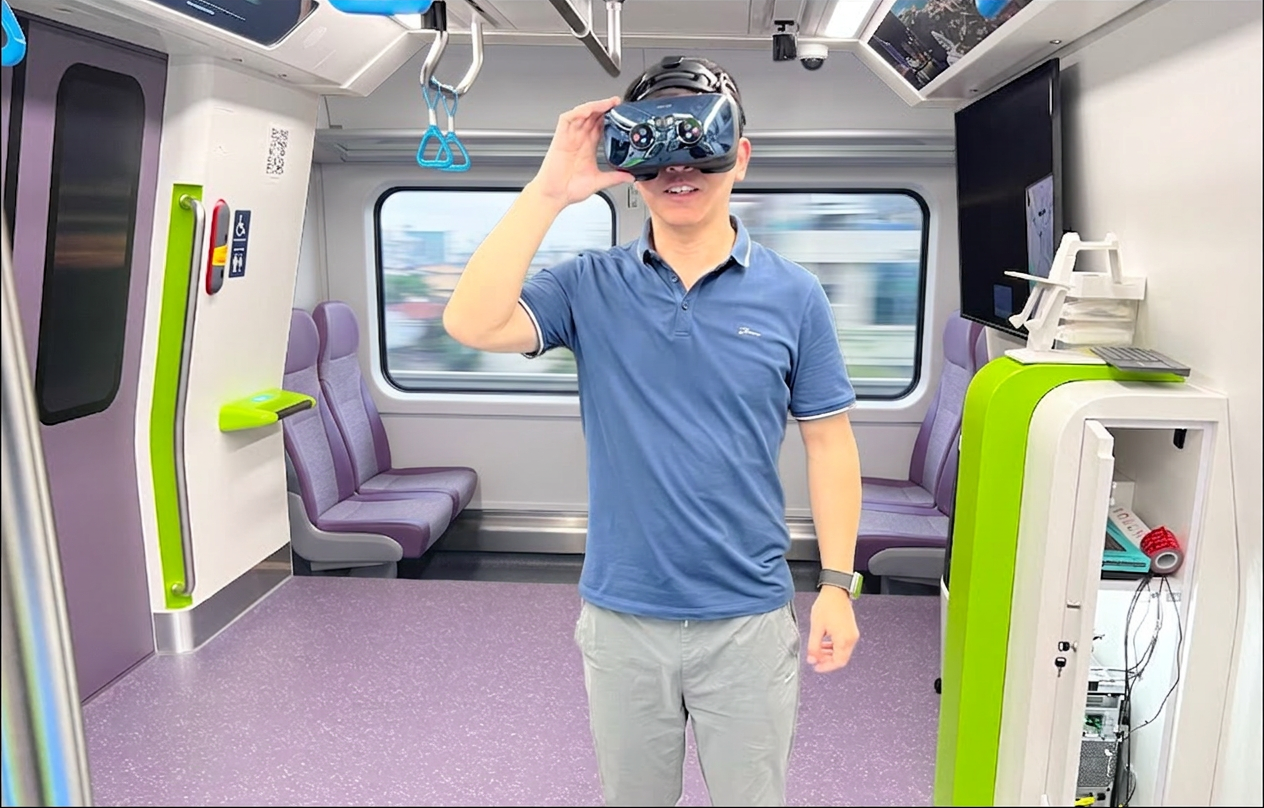
Designing train interiors has always relied on expensive physical mock-ups and static 3D renders. Mixed reality is fundamentally changing that process — giving engineers, designers, and clients the ability to walk through a full-scale virtual train before a single component is manufactured.
From Static Models to Living Designs
Traditional rail transit design relies on physical prototypes that are costly to produce, difficult to modify, and nearly impossible to experience at real scale during early design phases. A change in seat layout or lighting configuration means rebuilding entire sections of the mock-up.
Mixed reality eliminates this bottleneck. By overlaying digital train structures, interior layouts, and lighting configurations onto real physical spaces, design teams can evaluate proposals in real scale — walking through virtual aisles, adjusting seat colors, and testing emergency exit visibility — all without physical prototypes.
Real + Virtual Alignment
The core technology behind Aedu's Mixed Reality Rail Visualization System is high-precision spatial positioning. Digital content must align perfectly with the physical environment — a millimeter of drift destroys the illusion and reduces trust in the design evaluation. Aedu's system achieves sub-centimeter accuracy, ensuring that what designers see in the headset accurately represents the real-world outcome.
Impact on the Industry
Rail operators and manufacturers who adopt mixed reality for design review report significant reductions in prototype costs, faster design approval cycles, and higher stakeholder confidence. Clients can experience the proposed design firsthand rather than interpreting flat drawings — leading to better decisions and fewer costly revisions post-production.
As spatial computing technology advances, mixed reality will become an indispensable tool across transportation design, architecture, and large-scale infrastructure planning.